As the global expansion of its business accelerates, B-EN-G has created a place where employees can independently improve their English skills and cultivate international business communication abilities. It's called the "Globalization Club." The initiative aims to lower the psychological barrier to speaking English while exposing employees to foreign cultures and the English language.
"We want to create opportunities for students to use English and to broaden their horizons to the world through exposure to different cultures."
In the world of global business, there are many situations where a desire to communicate with others and a never-give-up attitude are more important than fluent English. The Globalization Club was started as a place to cultivate these practical skills. Arata Nakamura of the Solutions Business Division, who is involved in running the club, explains what prompted him to start this initiative:
"B-EN-G's main clients, manufacturing companies, are strengthening their overseas expansion and aiming to further increase the proportion of their overseas sales in order to respond to market changes and achieve further growth. As our clients' business activities become increasingly globalized, in order to support their business strategies and solve cross-border issues, B-EN-G members themselves need to look overseas and improve their English skills as a common language. At the same time, many employees still have limited opportunities to use English in their daily work. In order to improve English skills, we thought it was important to first remove any 'resistance to using English.' It is not necessary for English to be perfect, but the first thing is to have an attitude of wanting to communicate. We wanted to create a space for this."
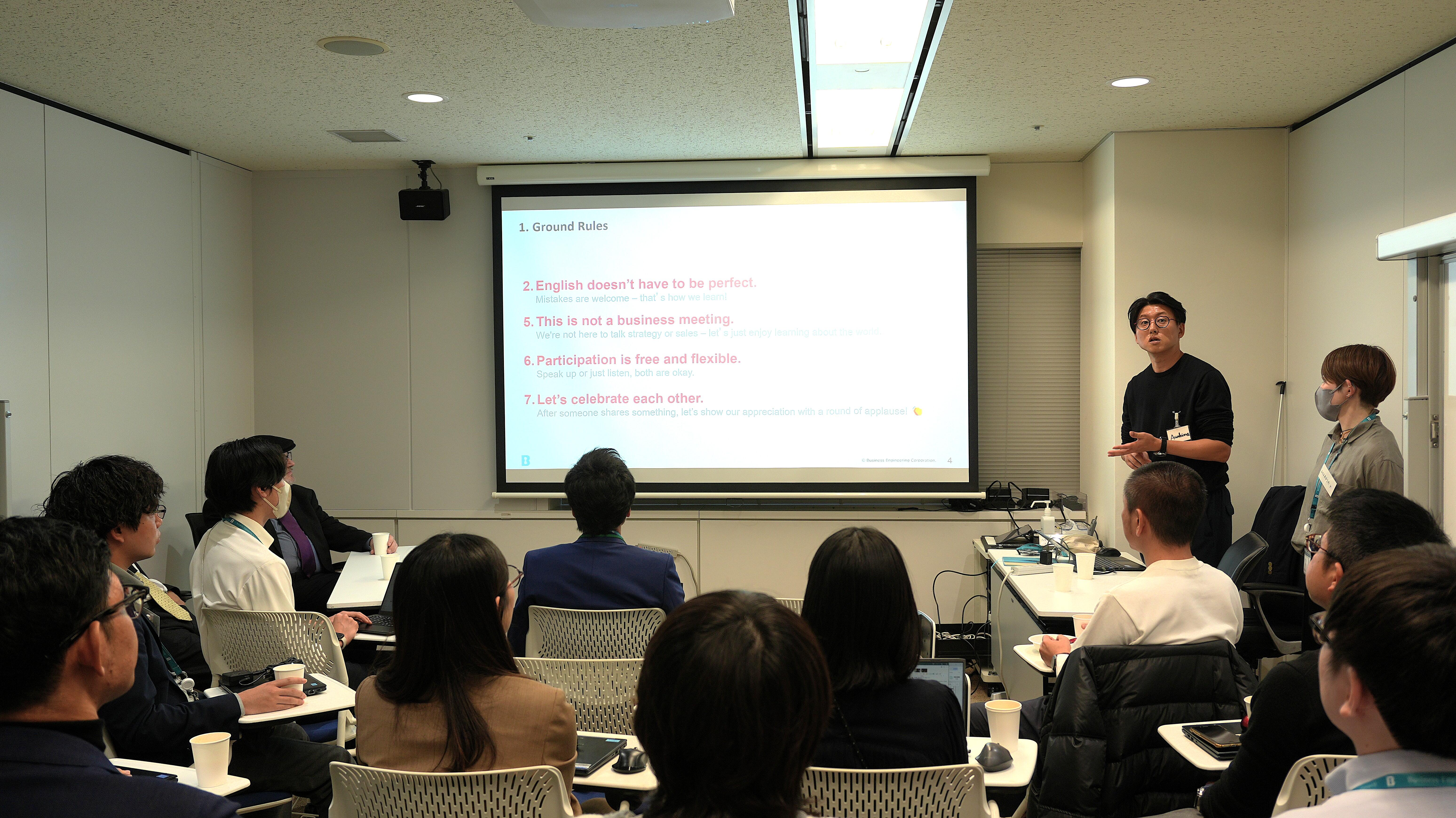
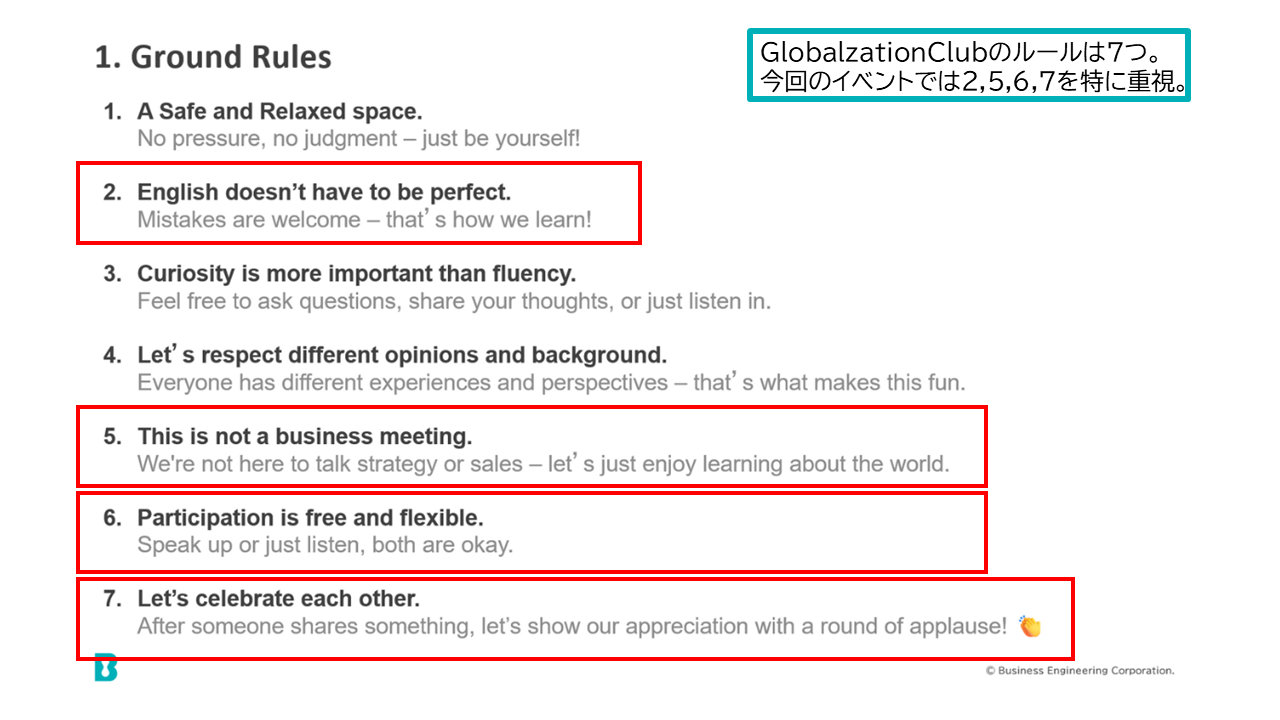
To put this idea into practice, the Globalization Club has seven ground rules: "You don't have to speak perfect English," "This is not a business meeting," "Participation should be free and flexible," and "Let's praise each other." These rules create an environment where participants can feel comfortable taking on the challenge of English.
The first real event was held
The club is usually held online, but this time it was held in person for the first time. Supporting communication in English will be Axel Henning Saleck, a business partner at B-EN-G and a member of the global network. Axel plays an important role in coordinating with overseas bases, and is one of the key people supporting B-EN-G's global expansion. (*)
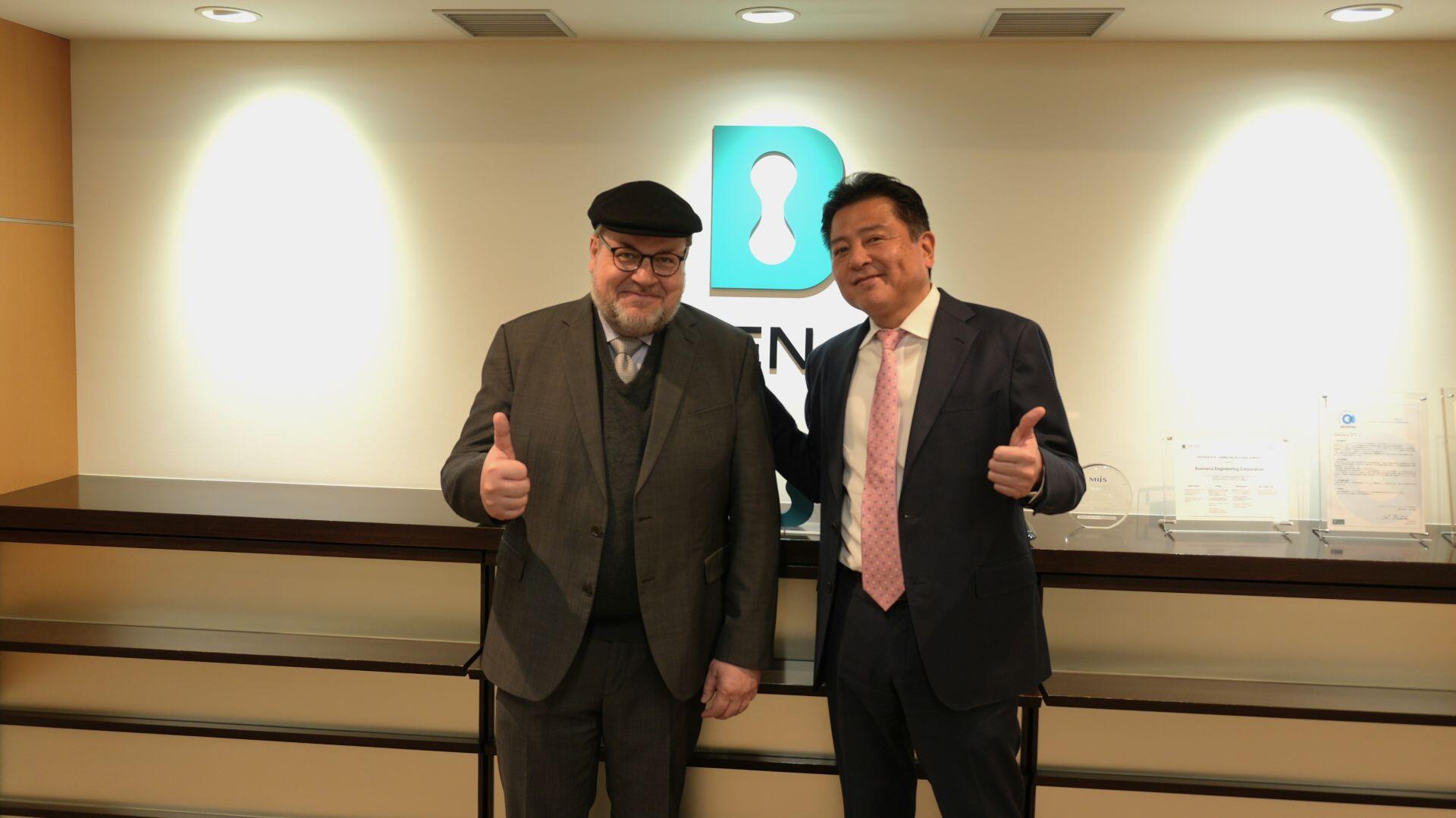
Although Axel has experience working in Japan and can understand a little Japanese, he strictly adheres to the rule of speaking only in English during the club and patiently listens to the presenters' explanations. This attitude encourages participants to take seriously the idea of "communicating in English."
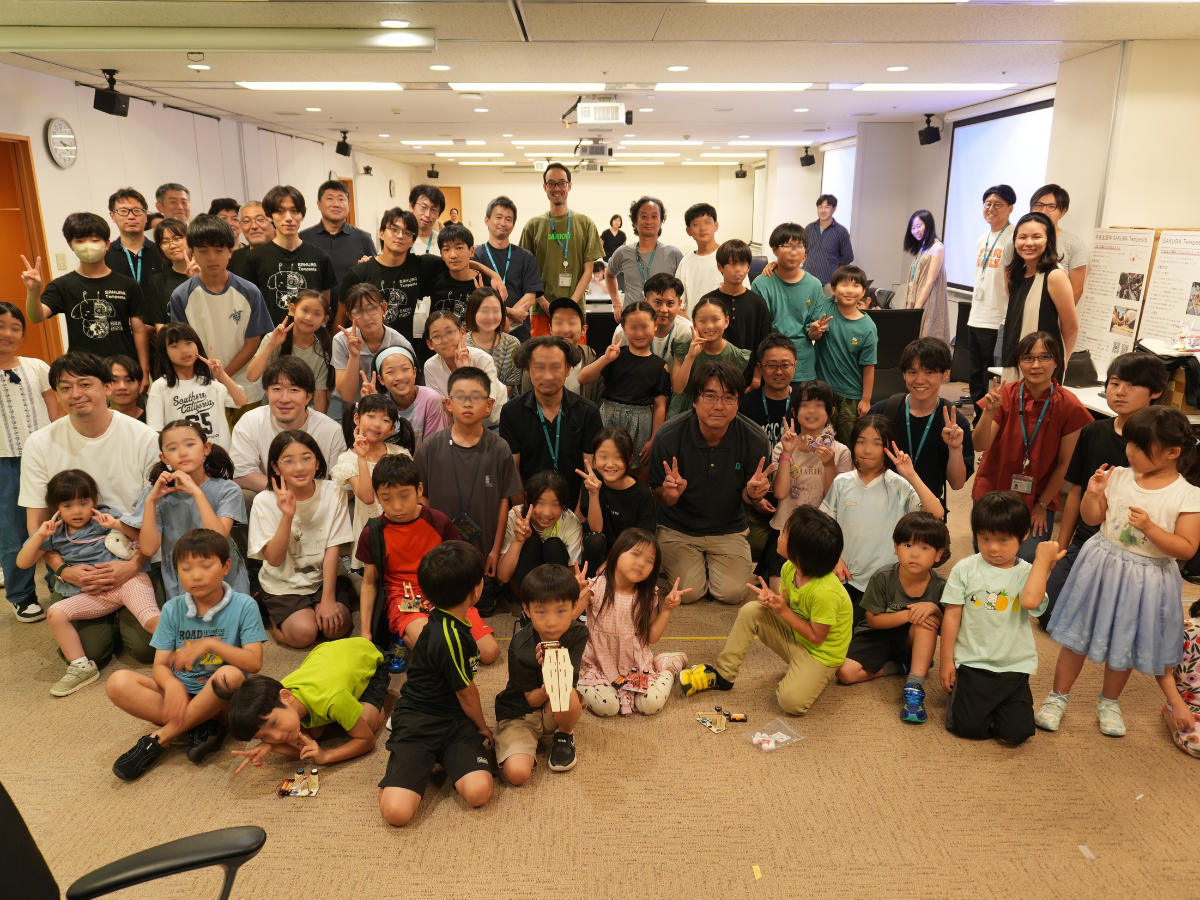
Approximately 20 people participated, ranging from junior employees in their first or second year with the company to veterans. Although their English skills varied, everyone focused on "communicating" and engaged in lively communication. The wide range of employees' skills brought together created an atmosphere of mutual stimulation and mutual learning. It was impressive to see everyone approach English at their own pace, without worrying about differences in level.
(* B-EN-G has established partnerships with two European-based IT consulting companies to strengthen global IT support in the manufacturing and SAP domain.)
Learning through practice
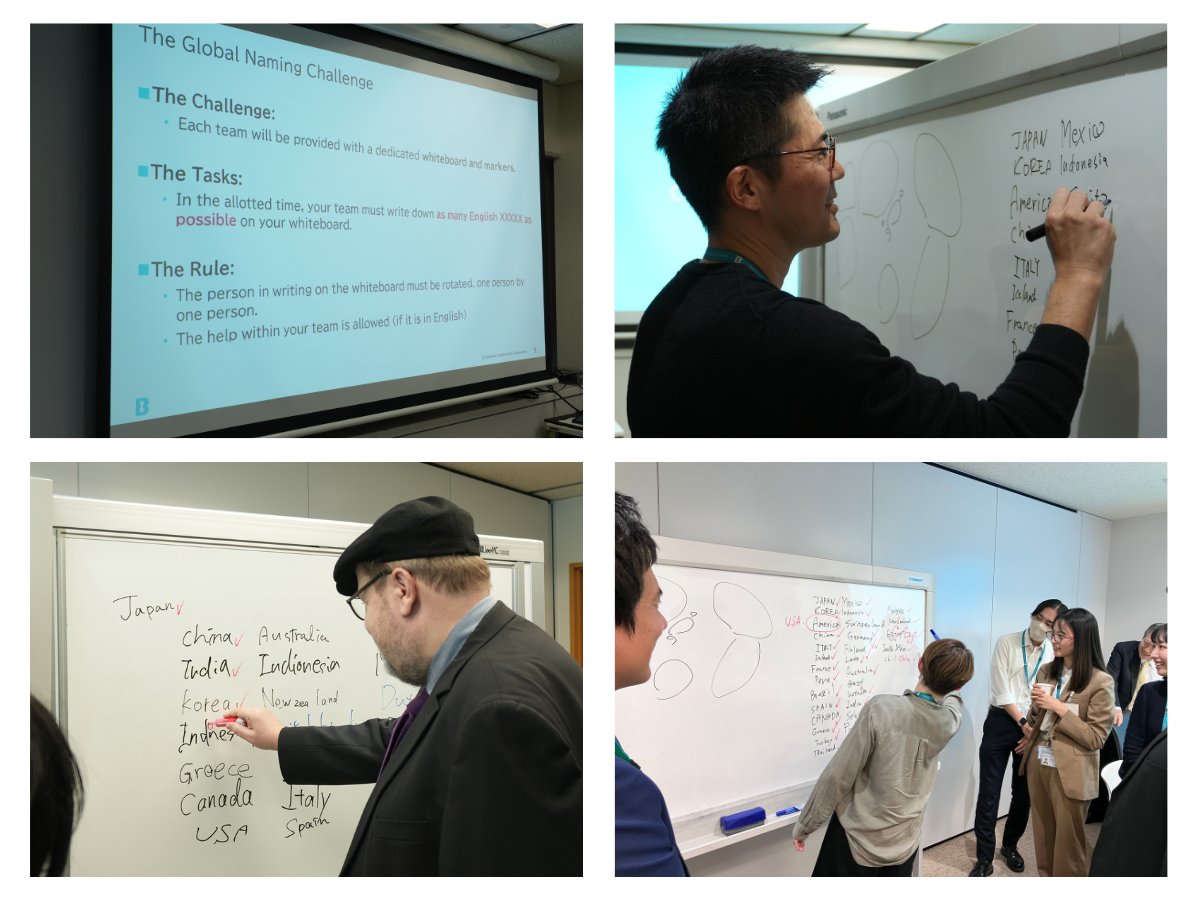
On the day, participants engaged in multiple activities, with the rule that they had to speak in English as a general rule. At first, there was a tense atmosphere in the venue, but as the activities progressed, smiles and laughter increased.
In the group work in English, participants played a game in which they had to write down the names of countries around the world in English. The task of writing down the names of countries written in katakana, which we use casually every day, in the correct English was unexpectedly difficult, with some participants saying, "There were surprisingly many country names I didn't know." As they worked together as a team to come up with answers, communication in English naturally emerged, with participants exchanging questions in English such as, "How do you write this?" and "Isn't this the correct way?"
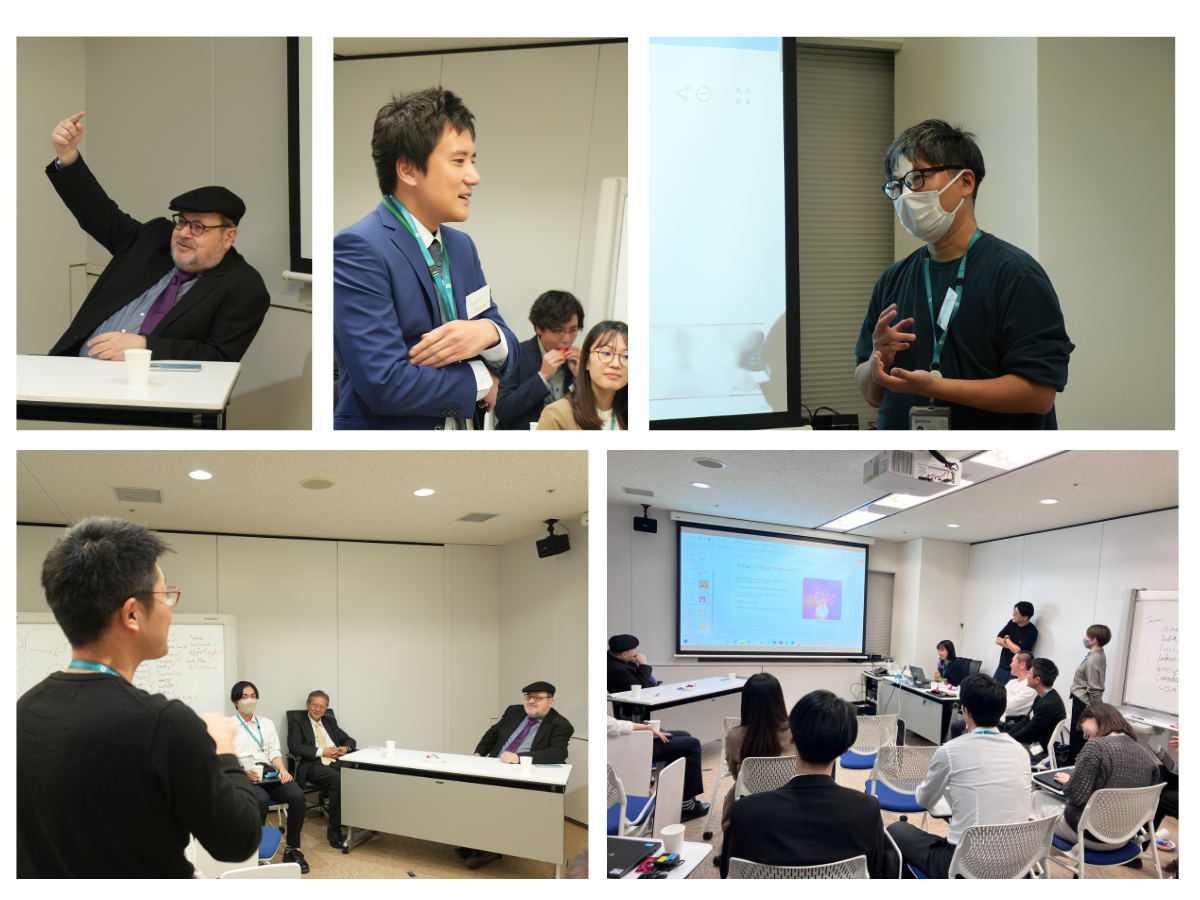
There was also time set aside for each participant to give a presentation in English. Each participant tried their best to express themselves in English, from simple greetings to details of their hobbies and work. Rather than simply speaking one-sidedly, participants also engaged in practical exchanges, such as posing questions to Axel based on the content of his presentation, imagining a conversation with the other person.
Participants asked a variety of questions, such as, "What kind of projects have you worked on?", "What are the best places to visit in Europe?", and "Do you have any hobbies?"
In response, Axel answered politely and was also seen following up on the participants' English expressions.
This two-way communication leads to improved practical English skills.
Axel was impressed by the participants' attitude of not being afraid of making grammatical or pronunciation mistakes and using gestures to communicate, saying, "I could understand your English very well. If you continue to practice with confidence, you will improve rapidly, so I hope you will keep up the good work."
Participant comments
Here are some comments from employees who participated in the club:
"I was nervous about presenting and talking to Axel face-to-face, but it was fun."
"I no longer feel bad about English. I realized that even if my grammar isn't perfect, it's important to make an effort to communicate."
"I was impressed by how many participants spoke English fluently. It inspired me to work hard too."
"I hardly ever have a chance to use English in my everyday work, so I'm very grateful to have an opportunity like this. I'd like to participate again next time."
These comments suggest that the psychological resistance to using English is being reduced and a more positive attitude toward communication is being fostered.
Towards future global expansion
B-EN-G has overseas subsidiaries in China, Thailand, Singapore, Indonesia, and the United States, and is promoting global expansion centered on Asia. Furthermore, through a strategic partnership with a European consulting firm announced in May 2025, the company is accelerating business development in the European region.
In order to achieve "adaptive globalization" to maintain and develop business globally in the future, it will be essential to have personnel who understand the characteristics and culture of each region and can communicate smoothly with local partners. In order to achieve B-EN-G's global strategies, such as establishing a unique business model based on emerging Asian markets, expanding overseas bases, and entering new countries, it is important that each employee has a "willingness to communicate."
Nakamura talks about his future prospects:
"Through this in-person event, I was reminded of the importance of face-to-face communication. Online options are convenient, but the sense of unity and depth of learning that comes from meeting face-to-face in the same space is exceptional. I would like to continue to use the relationships of trust we built through this in-person event to create a fun learning environment and encourage more employees to participate. I would also be happy if the experience gained through this club can be put to use in actual overseas projects and global work."
The "Globalization Club," which was conceived by an employee, will continue to be held in the future to develop the human resources that will support B-EN-G's global expansion. Perfect English proficiency is not the starting point for communication across borders; the desire to communicate is. Small steps toward English will eventually lead to collaboration with partners around the world and open up new business possibilities. B-EN-G will achieve further growth on the global stage, with each employee taking on new challenges.