*1"Ikugyo" is the nickname for childcare leave in Tokyo. This article will use this term consistently.
In the previous article, we interviewed three employees about their work styles after returning to work after childcare, how they balance their daily childcare and work responsibilities, and the changes they face as parents grow up. In this final installment, we will talk about how to deal with the health problems that all families face, their outlook for future work styles, and advice for those who are about to start working.
<Participants>
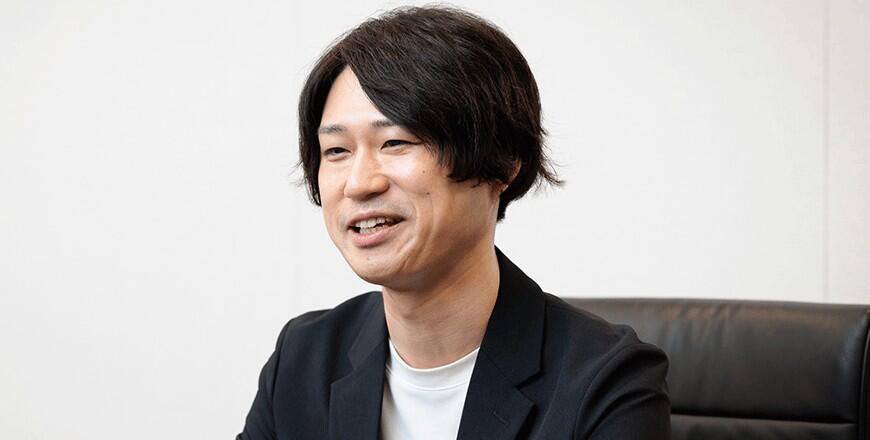
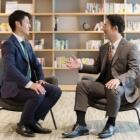
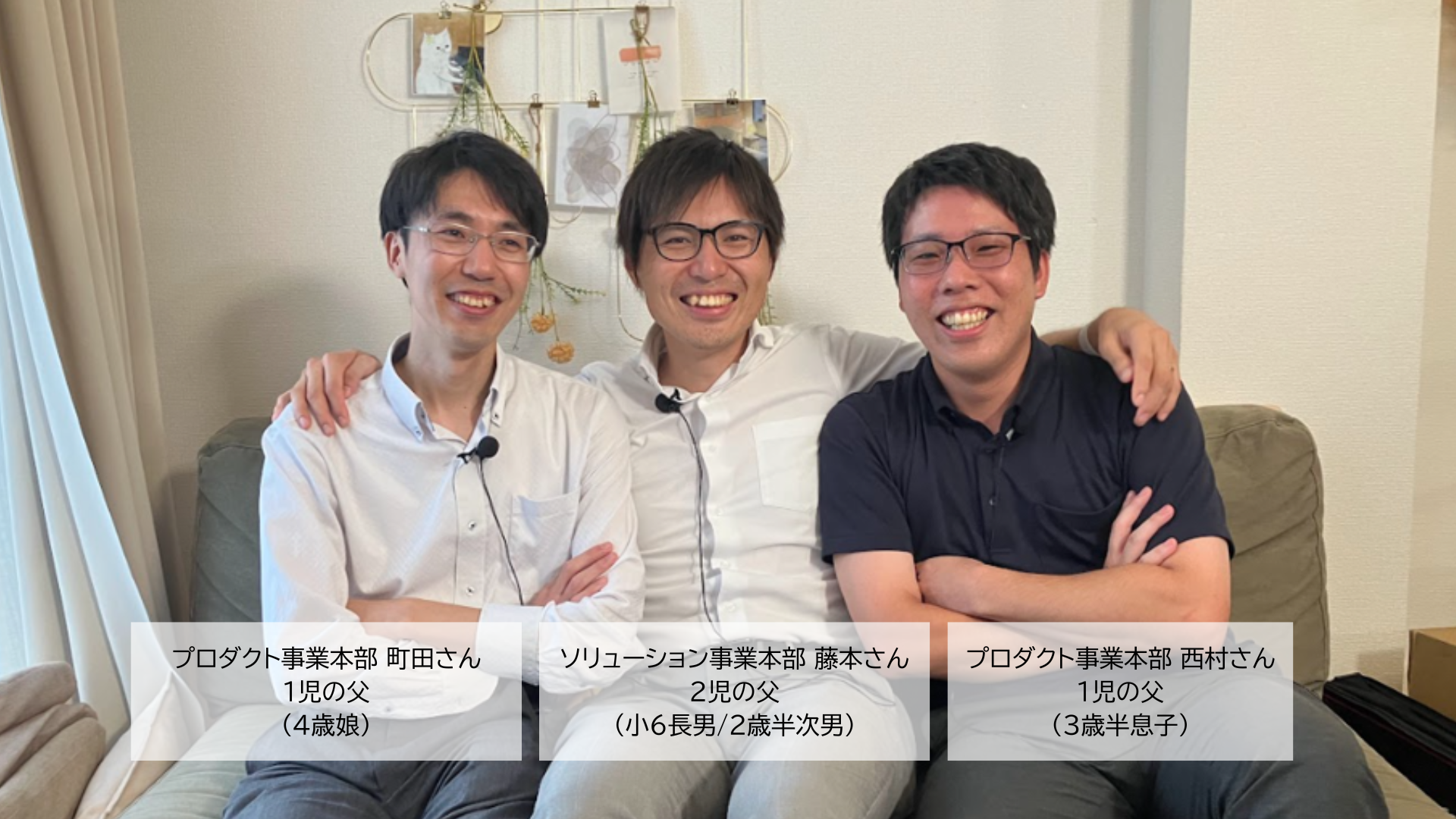
Product Business Division: Mr. Machida (left in photo)
Father of a 4-year-old daughter. Worked for 4 months when their first child was born in August 2020. Responsible for mcframe implementation support, partner support, video production, etc. His wife also works in the IT industry, making them a dual-income family.
Mr. Fujimoto (center of photo) from the Solutions Business Division
He is the father of two children, an eldest son in sixth grade and a second son who is two and a half years old. He did not work for his first child, but worked for two months when his second child was born. He is in charge of IoT implementation and maintenance.
Mr. Nishimura (right in the photo) from the Product Business Division
Father of a 3-year-old son. Received 5 months of parental leave when his first child was born in May 2021. Responsible for product planning for mcframe X, the SaaS version of the mcframe series. Goes to the pool with his son about once every two weeks.
*The departments and children's ages are as of the time of the interview.
Dealing with sudden illness
When raising children, it is inevitable that they will suddenly become ill. This is especially true once they start attending nursery school, as there are more opportunities for them to contract infectious diseases throughout the year.
How do you deal with sudden illness? From the stories of the three people, it seems that each family is cooperating while adjusting their work schedules.
Machida says that in his household, he sometimes asks his parents for support.
"If my child becomes infected, I can't take him to nursery school. First, on the day of the infection, either my wife or I, whoever can make the arrangements, will take him to the hospital. The problem is the few days after that. He can't go to nursery school for at least three days until the fever has subsided, so I either cancel or reschedule work appointments, or, if that's difficult, I ask my parents to help me by coming to our house to look after him."
Now that her daughter is four years old, she says it's easier to deal with her than before. "When she was one or two years old, it was difficult to control her, and she would sometimes mess with the computer's power outlet during a meeting. Now she listens to my requests, and there are more days when I can just tell her to watch a video."
Fujimoto spoke about his experience of successive members of his family becoming infected.
"When our oldest child got the flu, our youngest child got it next, then me, and then my wife...and so on and so forth. We all had fevers of around 39 degrees and it was tough, but my wife did a great job as the last line of defense. It was a similar process during the coronavirus outbreak, but my wife didn't get sick even while caring for them, and I ended up getting sick first..." Even in times like those, the two of them work together to overcome their children's illnesses.
"When we take him to the hospital, I drive and my wife accompanies him, so we manage somehow together. There are times when we have to take time off work unexpectedly, but we are flexible in that regard."
Like Fujimoto, Nishimura has also experienced family members becoming infected one after the other and having to deal with sudden illnesses caused by children falling ill.
"When family members take turns getting sick, it can take nearly two weeks for everyone to recover. In those cases, I work from home for two weeks *. I get through it somehow by having my child watch videos while I work and adjust meeting times. In the winter when my child started nursery school at age 0, around the time he was 8 to 9 months old, he was most susceptible to getting sick. When he was one year old, it was also difficult from December to February, but he gradually got sick less and less. From around age 2, I felt that he started to get stronger."
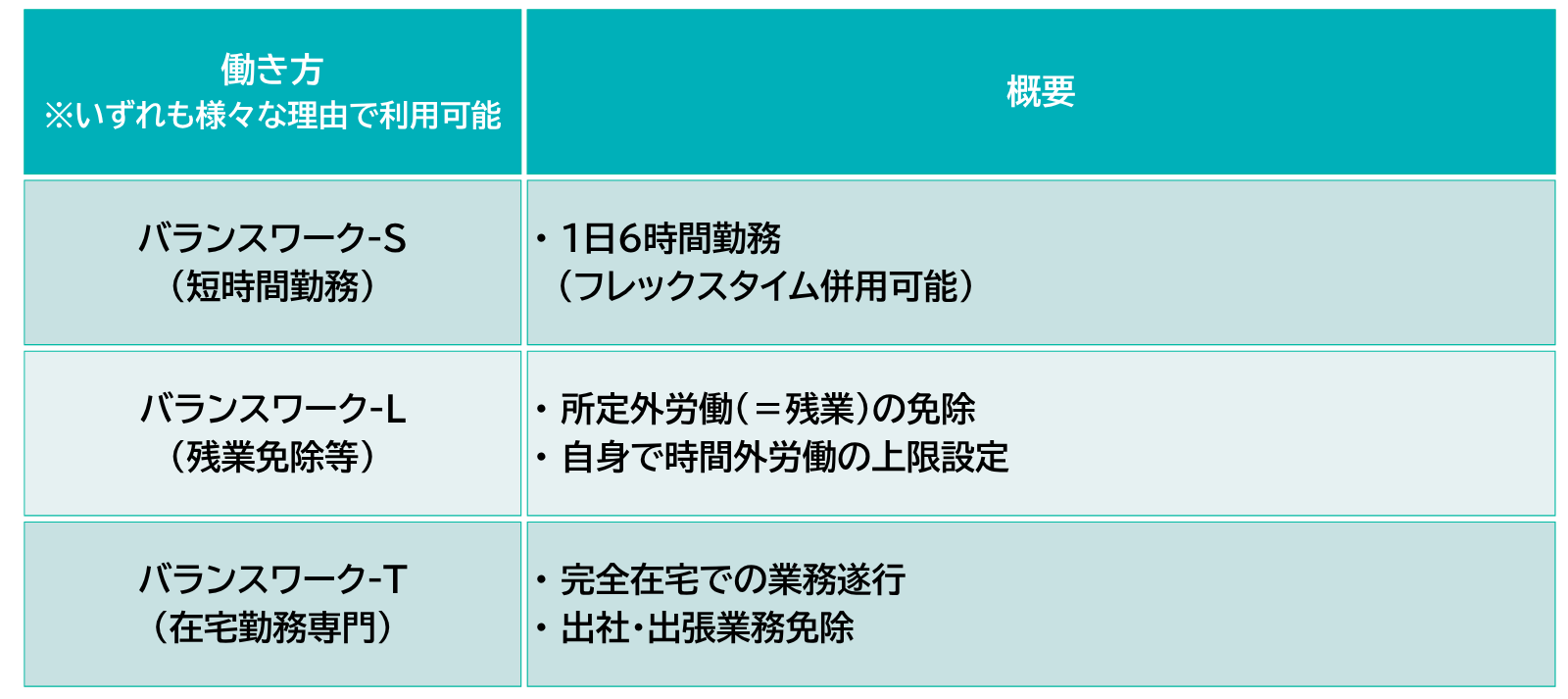
* At B-EN-G, it is possible to work from home approximately 50% of the month. It is also possible to work completely from home on a monthly basis. Please see the diagram below for the work styles that can be selected under the"B-Work-Life Balance System."
What I'm thinking about raising children in the future and a message to those who are raising children
Each of them shared their thoughts about raising children in the future and a message for those who will be raising children in the future.
The importance of planning (Mr. Fujimoto)

Fujimoto spoke from her own experience about the importance of planning. "As my children grow up, I think I will gradually become more independent, so I would like my coworkers to continue to support them a little longer until they reach the early grades of elementary school. After listening to today's talk, I once again realized the importance of planning. I would recommend that those who will be raising children in the future think about various things, such as handover plans, how to spend time while raising children, and how to choose a nursery school."
Fujimoto is currently considering which kindergarten to enroll his second child in. "My wife is researching kindergartens. We are looking for a kindergarten where our child can have fun every day and grow. I will work hard with her to find a suitable place."
Information gathering and flexible response (Mr. Nishimura)
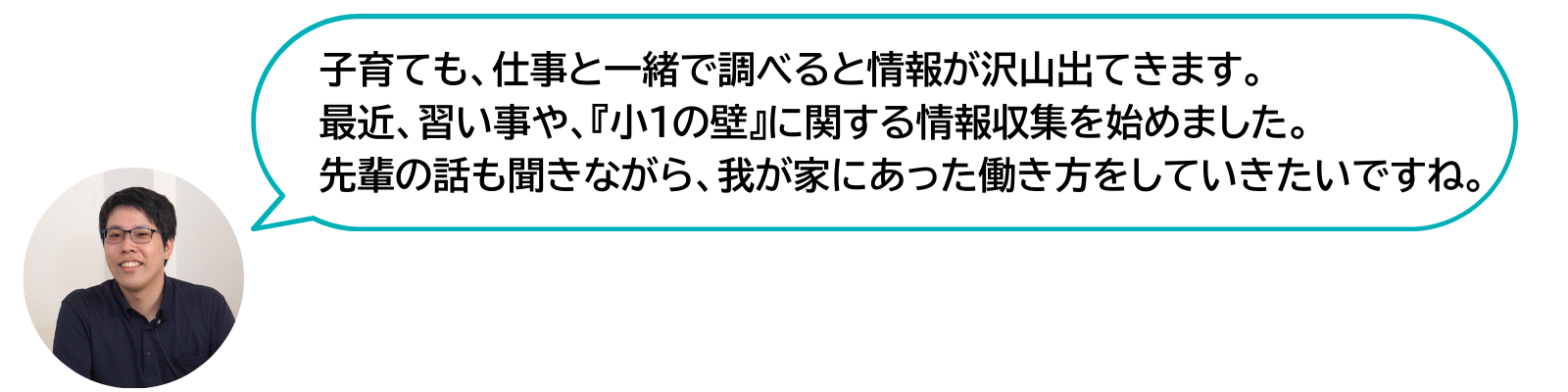
Nishimura says that future challenges he is thinking about include extracurricular activities and the hurdle of first grade.
"When I asked around about extracurricular activities, I found that many people were taking gymnastics or swimming lessons. Gymnastics seems like it would help children to use their bodies better, so I thought it might be a good idea to start my child once he is able to follow the teacher's instructions and listen to what the teacher is saying."
She also said that she has begun gathering information on what to do after children start elementary school. "I'm also concerned about the barrier of first grade. I'd like to hear from senior employees about how to deal with the situation when children start coming home earlier, such as during summer vacation, which wasn't available at after-school care or daycare centers."
Nishimura, who has been diligently gathering information herself, cited the importance of gathering information as advice for those who are about to become parents. "I researched on my own about children on waiting lists and nurseries, and looked up on YouTube and websites how to introduce solid food to babies. Just like with work, if you do your research properly you will get information and you will have a more concrete image, so I think it's important to gather information beforehand."
I want to support my child's independence (Machida)

Machida says he is looking forward to watching his child grow up.
"I am looking forward to seeing when my child will experience the process of children's independent thinking that Mr. Fujimoto mentioned. I would like to do my best to create an environment that will support this. I think what I want my child to do and what he wants to do are different, so I would like to be flexible in that regard."
Additionally, she stressed the importance of being flexible to those who are about to start raising children. "There is a lot of good information out there about child-rearing, but in the end, there are many things you won't know until you try it. You can do your research, but things may not turn out as you hoped. I think it's best not to be too nervous, but to take things one step at a time and gain experience as you go, just like in your work."
Machida also says that she wants to cherish the people around her who support her. "I'm grateful for the systems that support child-rearing, both in my work and in my social environment. I'm grateful to the people who create that environment, and I hope we can be in a position to help create that environment as well."
Conclusion: For those considering obtaining childcare leave
This is the third installment of our interview series with people who have experience working in childcare. In the final installment, we talked about how to deal with sudden health issues that are inevitable after working in childcare, and offered advice for those who are just starting out in childcare.
From the stories of these three people, we could sense that the situation changes as the child grows. The period from birth to around two years old is particularly difficult, when health problems are likely to occur, but as the child grows, life becomes more stable. However, as the child goes on to higher education and grows up, the family's environment, as well as their worries, continue to change.
Even in such circumstances, in order to maintain a work-life balance and build a career that suits you, it is important to be able to choose a working style that suits your situation at the time, such as a system that allows you to choose where and when you work, such as teleworking or short-time work. In addition, the understanding and support of coworkers, family, and society as a whole is also important.
If you are considering having a child, we encourage you to consult with your workplace, family, and those around you and make a plan that suits you.
B-EN-G believes that only when systems and understanding are in place can employees feel comfortable balancing work and childcare.
We will continue to work to create an environment where each employee can raise their work with peace of mind and balance their work and family lives.
Thank you for reading to the end. I hope this interview will be helpful to those who are planning to start working, as well as those who are trying to balance work and childcare.