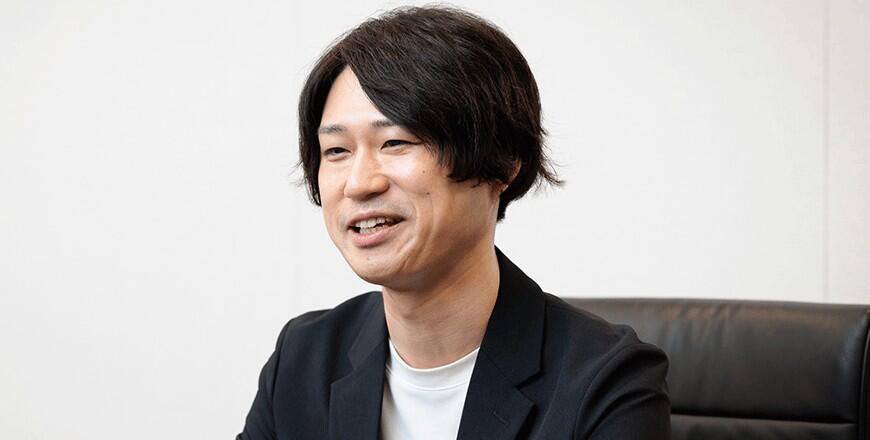
Speaker: Business Engineering Corporation
Solutions Business Division
Digital Supply Chain Division, SCM Solutions Department 1
consultant
Yutaka Nara
Yutaka Nara has been involved with the global standard MES (Manufacturing Execution System) package "DELMIA Apriso" for over 10 years, accumulating extensive experience in everything from development and design to requirements definition and implementation support. While discerning standard functions and the unique business value of each company, he works with customers to delve into what they truly want to achieve on the ground, leading them to an MES platform that is optimized for the whole. At the heart of this is his attitude of thoroughly doing the basics and staying close to the people on the ground, even if it's "down to the ground."
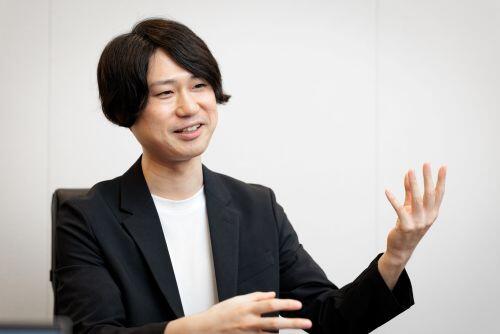
A steady spirit of inquiry fostered it.
Proven expertise in the MES field
The digitalization of manufacturing sites has gone beyond mere efficiency improvements and is now a factor that directly impacts a company's competitiveness. MES (Manufacturing Execution System) plays a central role in this. It is responsible for comprehensively managing information related to production processes, including instructions to workers, progress, performance, quality, and traceability. It also works in conjunction with peripheral systems such as ERP (Enterprise Resource Planning), PLM (Product Lifecycle Management), and equipment control systems to support increased productivity and early detection of problems.
Hiroshi Nara is a leading figure in solutions aimed at this manufacturing DX (digital transformation), having accumulated over 10 years of experience, primarily with Dassault Systèmes' global MES package, "DELMIA Apriso."
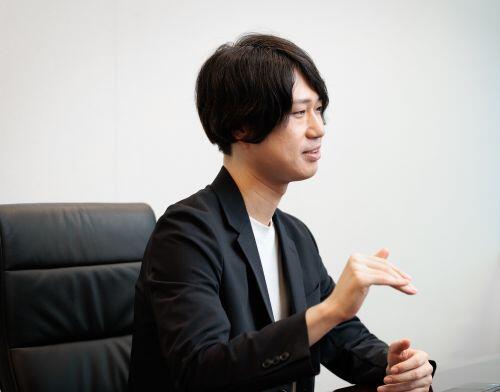
However, Nara wasn't initially well-versed in IT or manufacturing. "At university, I majored in biological sciences and worked on research that involved extracting DNA from seaweed and deciphering the process of evolution. Also, when I was looking for a job, I wasn't aiming for the IT industry from the start, and I was a complete novice when it came to systems," Nara explains.
However, it was this painstaking approach of gathering data, building a solid foundation of evidence, constructing sound logic, and getting closer to the truth that proved valuable in the world of MES (Manufacturing Execution System).
Nara joined the company in 2014 and immediately joined an MES project after his assignment. Starting with the development and testing of DELMIA Apriso, he has steadily expanded his skills by progressing through basic design, implementation support, and requirements definition in the upstream phases. "I spent a long time working my way up from the bottom," Nara himself reflects, and this period is the source of his confidence, which has earned him the deep trust of many clients in numerous projects, and his belief that "I am second to none in the MES field."
Because "anything is possible"
The ability to make judgments about the overall optimal solution will be put to the test.
DELMIA Apriso is a Manufacturing Operations Management (MOM) solution that expands upon the concept of MES, and is characterized by its ability to cover a wide range of areas on a single platform, including not only manufacturing performance management but also quality control, inventory management, maintenance management, and employee management.
B-EN-G began its DELMIA Apriso business in 2005 and is known as the first partner to successfully implement it in Japan as a prime contractor. Nara, who has worked closely with DELMIA Apriso within B-EN-G, shared what points he considers when deploying this solution to various manufacturing sites.
"The advantage of DELMIA Apriso lies in its ability to be flexibly configured to suit each customer's business processes while still possessing a global standard model. It combines the freedom of scratch development with the convenience of a package. However, if this flexibility is mishandled, it could lead to the creation of a complex system far removed from the standard," says Nara, emphasizing, "That's why it's more important to determine 'what should be done' than to be able to 'do anything'."
In fact, we receive many requests from customers every day. Some of these are urgent improvement requests from the manufacturing floor, but if we were to systematize everything as is, costs and operational burdens would increase, and the system might end up being more difficult to use.
Therefore, Nara constantly asks customers "what do you really want to achieve?" based on DELMIA Apriso's standard features and globally cultivated best practices. Through this process, he identifies areas that should be aligned with the standard and areas that should be deliberately preserved as the customer's unique strengths.
What underpins these last-minute decisions is none other than the many years of experience in development, testing, and design that I mentioned earlier.
"If you don't know the details of the package, you can't determine whether the concept you envisioned in the upstream phase is feasible to implement. Also, if you don't understand the design, you can't propose improvement measures that will convince the customer," says Nara, who, relying on the experience he has accumulated from the downstream phases, is guiding MES towards its ideal form based on a holistic optimization perspective.
Identify the challenges at each site
Connecting standards and uniqueness
The projects Nara has been involved in so far span a wide range of fields, including precision equipment, transportation equipment, electrical equipment, prime movers, power generation equipment, aircraft, and electronic components. These are all sites in discrete (assembly-based) manufacturing, which truly support the very foundation of Japanese manufacturing.
In a project for an electronic components manufacturer, the concept of an automated line, which had been first demonstrated at a domestic mother factory, was deployed to overseas factories, and efforts were made to create an MES (Manufacturing Execution System) foundation for large-scale production with stable quality.
"What became an urgent task was to build a system to maintain stable production and consistent quality. By formalizing the wisdom and know-how of the factory floor, we aimed to reduce variations among workers and realize continuous improvement activities based on data. We aimed for global expansion by standardizing and integrating production management systems, including MES, and by promoting cross-site data utilization to maximize resource utilization." (Nara)
In response to this challenge, Nara proposed a basic policy of increasing development efficiency and accelerating company-wide deployment by adhering as closely as possible to the standard specifications of DELMIA Apriso. The system, which had been optimized for individual parts, was revamped into a fully optimized form that seamlessly connects everything from equipment to manufacturing management and core systems. As a result, data collection of 5M (Man, Machine, Material, Method, Measurement) and visualization of manufacturing history were achieved.
"By recording data in an analyzable format—who processed which product, using which equipment, under what conditions, and without relying on subjective judgment—we have established a foundation that can withstand not only the initial setup of the new factory but also future production expansion and quality improvements." (Nara)
Furthermore, in projects within the power generation industry, which has its own strict regulations and complex build-to-order processes, we faced challenges that could not be addressed by the base system alone.
Nara's proposed approach was to "divide functions in line with global standards," based on DELMIA Apriso's best practices for the A&D (aerospace and defense) industry. He clearly separated areas that should be handled by standard functions from areas that should be handled by proprietary logic that is not inconsistent with the package, and designed and proposed functions that would not cause problems with upstream design changes or on-site operations.
"We designed and proposed a unique logic that fits seamlessly into the package, balancing the data that needed correction in the upstream phase with the desire for minor adjustments to be made on-site. Furthermore, for manufacturing sites where email cannot be used due to security constraints, we created an alternative method for smoothly handing over tasks from one person to the next." (Nara)
Initially, there were times when the client was reluctant to make decisions, but Nara, acting as the de facto IT lead, actively spearheaded the project, resulting in a high level of QCD (Quality, Cost, Delivery) in the MES deployment.
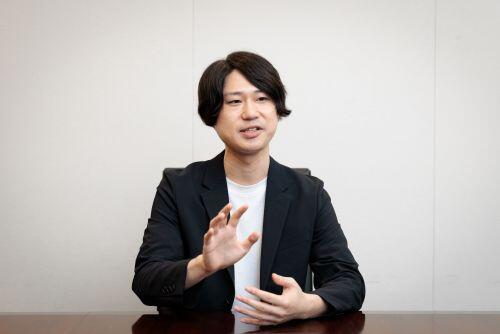
We approach our customers with a focus on "doing the ordinary things thoroughly."
Leading to the next level of manufacturing DX
The common success factor in both cases was not simply the implementation of DELMIA Apriso.
The key to success lies in the careful differentiation of requirements, which went beyond simply defining what the customer truly wanted to achieve, including addressing potential business challenges such as "maintaining consistent quality even at overseas locations," "creating a history that can withstand future data analysis and utilization," and "integrating complex design changes and process progressions seamlessly into the manufacturing process." This involved thoroughly examining which aspects should be handled by DELMIA Apriso's standard functions and which should be expanded to leverage the customer's unique competitive advantage.
Even if a business issue should ideally be decided by the client, instead of simply saying, "That's your job," we listen to the background, share their concerns, and think together. Furthermore, instead of providing the answer for them, we organize the issues so that the client can make their own decision.
"This kind of hands-on, down-to-earth approach, which is characteristic of B-EN-G, has fostered a relationship where clients feel comfortable consulting with us even before specifications are finalized, leading to project management with fewer rework issues. As a result, we were able to provide our clients with an MES (Manufacturing Execution System) platform that will lead to future improvement activities such as business process standardization and the establishment of quality traceability." (Nara)
Having built a solid track record, Nara is looking to broaden his perspective as a project leader, moving into a role that involves negotiating with clients and managing the entire project. Of course, even if he rises to a higher position, his desire to remain close to those on the ground will remain unchanged.
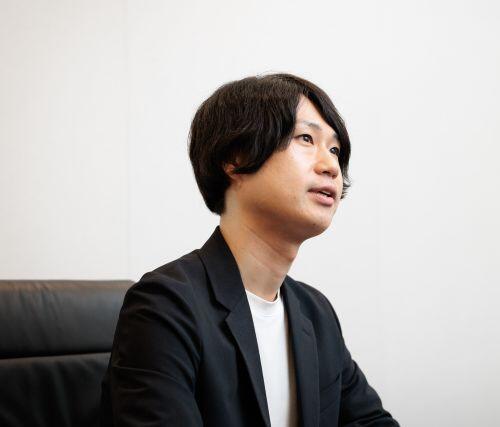
"My philosophy is 'thoroughness in the ordinary.' I start by doing the basics thoroughly without compromise, and then I add extra measures tailored to the situation on site, such as standardizing design and development, maintaining quality, and adjusting specifications. Also, what I value most in project execution is making sure that team members feel comfortable working. I don't act superior just because I'm a leader; I respect others and boost everyone's motivation, and I'm confident that this will maximize the quality and momentum of the project." (Nara)
Nara's approach of confronting the fundamental challenges faced on the ground and building optimal solutions together with customers will be a sure driving force for future manufacturing DX and will support Japanese manufacturing.