
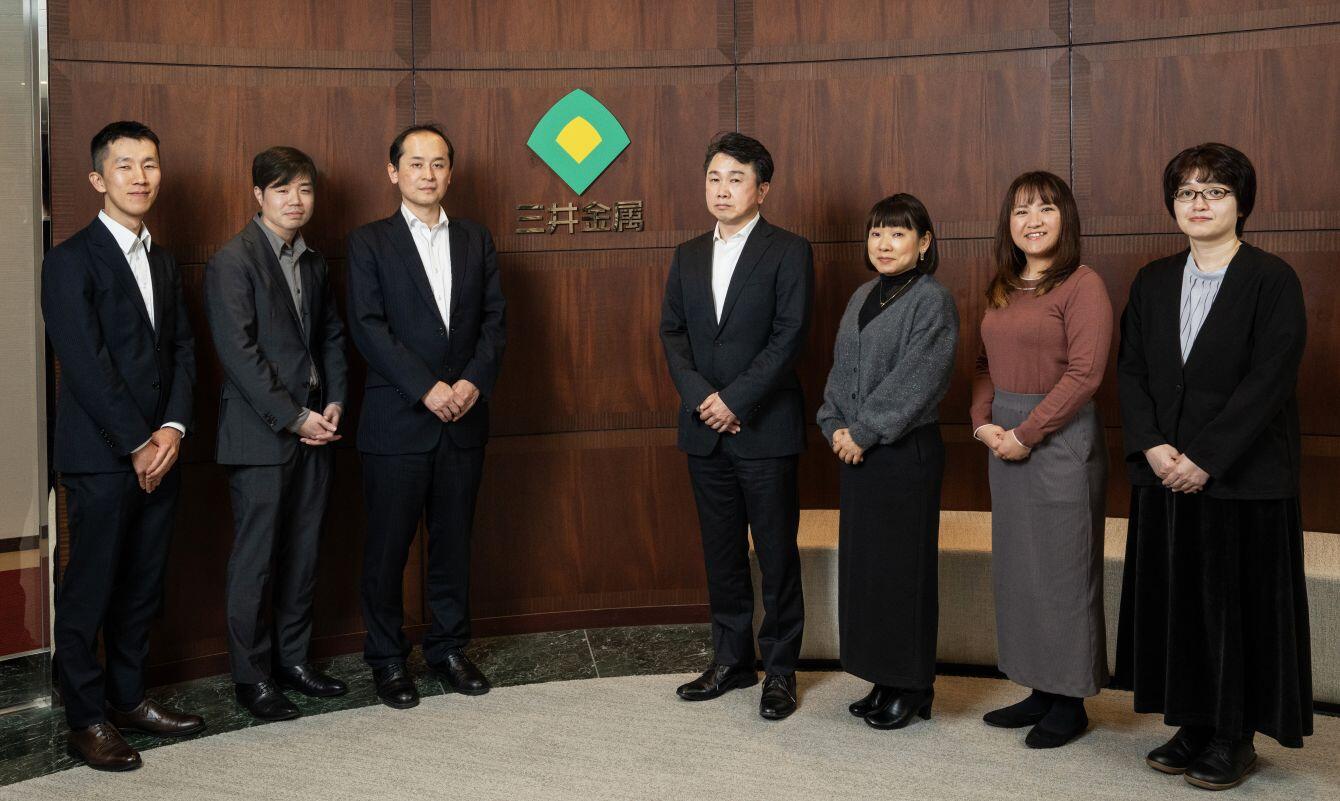
Mitsui Kinzoku, a leading company in Japan's non-ferrous metals industry, implemented MDM SaaS, part of Informatica's SaaS platform, Informatica Intelligent Data Management Cloud, with the support of Business Engineering (B-EN-G), to standardize and streamline master data management operations across the group. By establishing a system for seamlessly sending flawless data to the revamped core system (SAP S/4HANA), the company has built a foundation for data utilization with an eye toward AI, accelerating the creation of an environment for more advanced management.
Issues before implementation
- To establish a management information infrastructure, there was an urgent need to ensure the quality and consistency of master data across the entire company.
- The amount of work required to maintain master data was enormous, causing delays in processing at the end of the month and fiscal year.
- There was an issue where the latest information such as changes in business partner names and mergers was not updated in a timely manner to the master data.
Implemented Products/Solutions
Informatica Intelligent Data Management Cloud(IDMC)-MDM SaaS
Implementation Results
- The quality and consistency of master data is guaranteed across the company, contributing to the development of a foundation for utilizing AI.
- Streamlining manual master maintenance work and significantly reducing the lead time until data can be used
- Significantly reduce the amount of work required to maintain data quality by linking with external databases
Implementation Points
- Centralizing master data from 80 group divisions into "company-wide assets"
- Automatic linking with external databases reduces workload for verifying business partners by 40%
- Adopted B-EN-G, which has expertise in integrating with the core system "SAP S/4HANA"
Reason for introduction
Establishing a "digital infrastructure" to support the spread of DX is an urgent task
With the high level of productivity that only a company with over a century of history can offer, Mitsui Kinzoku is a company that continues to grow steadily, with its core businesses being non-ferrous metal smelting, which provides the materials that form the foundation of industry, and functional materials, which provides high-value-added products in a wide range of fields such as electronic materials, automotive parts, and environmentally friendly materials.The group includes many companies such as Kamioka Mining, Hikoshima Smelting, Mitsui Kinzoku Perlite, Mitsui Kinzoku Die Casting, and the information subsidiary Mitsui Kinzoku Yoursoft, and has a consolidated employee base of over 12,000.
In recent years, the company has been actively working on digital transformation (DX). Yamazaki, General Manager of the company's ICT Management Department, explains, "We are promoting DX as one of the mechanisms to support integrated management. Based on the 'digital infrastructure development' that has progressed uniformly across the company over the past three years, we plan to share and establish the 'digital technology utilization' that has been promoted in each department/office across the entire company, and link it to the creation of new value."
One of the challenges in developing this digital infrastructure is integrating data that was scattered across the entire group. Until now, 80 departments in Japan and overseas had been operating and managing master data according to their own rules, which had been a barrier to using data across the entire company.
The opportunity to break through this situation was the project to revamp our core business systems that was launched in 2019. Mr. Ishii, Chief of the ICT Management Department, recalls the aims at the time as follows:
"In May 2019, we launched a project to revamp our core systems from SAP ECC 6.0 to SAP S/4HANA. This was the impetus for us to consolidate the customer master and account master data that had been managed and operated separately by 80 departments across the group, both in Japan and overseas, and create a system that could be used company-wide while ensuring the accuracy and consistency of business data. This was the impetus for introducing an MDM tool."
Project Background
Adopted Informatica MDM SaaS for integrated master data management and operational efficiency
Between September and November 2019, the company established a working group to consolidate master data and formulated an integration policy, and in 2020 also conducted a survey of master data management (MDM) tools that would streamline centralized management of master data. However, the company decided to postpone the introduction of an MDM tool and instead implement only a master data management workflow, as it was decided that internal resources should be concentrated on updating its core systems.
Ishii explains, "The key point of introducing the workflow is to establish a new organization to handle master data management for the entire group and to transition from decentralized master data management, which had previously been handled by each department, to centralized management. The system is structured so that master data that has gone through the registration application and approval flow on a departmental basis is checked for quality by the master data manager, who then gives final approval before registering it in the master data. Based on this new workflow, we began centralizing the management of customer master data and account master data in April 2022, when the core system renewal project was completed."

Mr. Ishii, Chief of the ICT Management Department
Although the introduction of workflows made progress in centralizing master data management, operational issues remained. The workload of checking and registering data during master data maintenance was heavy, and processing tended to be delayed, especially at the end of the month or fiscal year. In addition, changes to business partner names and other such changes had to be submitted manually, making it difficult to keep information up to date.
To fundamentally solve these issues, the company decided to introduce an MDM tool. Its partner, Business Engineering (B-EN-G), proposed the introduction of the MDM function (hereinafter referred to as MDM SaaS) of Informatica's cloud-based data management platform, "Informatica Intelligent Data Management Cloud," as well as the use of a corporate database service as a solution to streamline master maintenance.
Regarding the reasons for adopting these tools, Mr. Goto of the ICT Management Department said, "One of the things we wanted to achieve in building our MDM infrastructure was to systematize and streamline master data maintenance. To that end, we compared several products, but we chose MDM SaaS because of its high scalability, which allows us to flexibly build an MDM infrastructure that spans a variety of systems. We also adopted a corporate database service and systematized the work of checking customer master data, which had previously been done manually, such as cross-checking it with the National Tax Agency's website. This has allowed us to create a system that can quickly and accurately reflect company information in the customer master data."

Mr. Goto, ICT Management Department
Furthermore, when asked why they chose B-EN-G as a partner for the implementation of MDM SaaS, they reflected, "B-EN-G not only has a wealth of experience in implementing Informatica products, but also had a deep understanding of what we wanted to achieve, and their proposal was the closest match to our needs. SaaS-based MDM SaaS is a product that is quite difficult to absorb unique needs. Among them, B-EN-G was the one that we judged to be able to meet almost all of the requirements we presented. This was another major reason why we selected B-EN-G."
Implementation process
Completed construction of MDM infrastructure with support from B-EN-G
The MDM SaaS implementation project started in March 2024 and was completed in July 2025, with the system now in full operation. The project promotion team was made up of personnel from Mitsui Kinzoku's ICT Management Department, Mitsui Kinzoku Yoursoft, and B-EN-G, and requirements were defined under this team from March to July 2024.
The requirements definition was carried out in two stages. In the first stage, verification scenarios were created based on existing workflows and functional requirements, and data flow and functional layout were determined through fit-and-gap analysis using the scenarios and actual equipment. In the second stage, based on the results of the first stage, system functional requirements, including add-on functions, non-functional requirements, testing policies, migration policies, and training policies were defined. Subsequently, the system's functional design, development, and testing proceeded in order, leading to full-scale operation in July 2025.
Mr. Nakanishi, sub-manager of the System Management Department at Mitsui Kinzoku Yoursoft, who led the practical aspects of this project, evaluates the role of B-EN-G as follows:
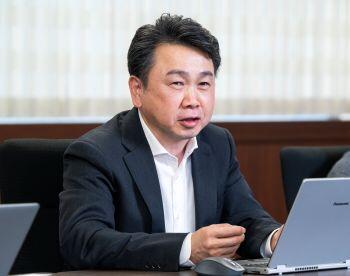
System Management Department
Sub-Manager Nakanishi
"The most important aspect of this construction was the interface mechanism that would seamlessly link the application workflow as an entry point, the MDM as a hub, and SAP S/4HANA as an exit point. We had confidence in the compatibility between Informatica products and SAP, but it was not easy to link the current workflow and realize the complex interactions between systems, such as sending back data if there were any defects. B-EN-G overcame the most difficult part of connecting these different systems, and they managed to do it exactly as we had initially expected, even though this configuration was rare for us. We are still considering minor improvements that have become apparent since the start of operation, but we highly appreciate the fact that they were able to create this seamless system."
Similarly, Mitsui Kinzoku Yoursoft's Sub-Manager of the System Management Department, Hayashishita, who also participated in this project with Nakanishi, commented, "There were almost no examples to use as reference for cloud-based MDM SaaS. We are grateful that B-EN-G implemented a system that followed our unique rules." Sankei and Yokoyama from the same department also expressed their gratitude for the precise proposals they received each time that embodied the complex requests of the operational department, and for the reliable construction that was carried out based on their development experience with Informatica MDM.
Effects and outlook of implementation
Reduced labor hours for checking customer master data by 40%, building a data infrastructure with an eye toward utilizing AI
Goto says that the MDM infrastructure, built using MDM SaaS and a corporate database service, has already produced significant results since it began operation.
"For example, the process of checking whether the names of business partners registered in the master data are correct has become much more efficient, reducing the amount of time required for each check by about 40%. We have also streamlined the process of changing the names of business partners in the master data in bulk based on the latest information, thereby keeping the master data up to date. In this way, building an MDM infrastructure has laid the groundwork for ensuring the quality and consistency of master data, and we feel that this is very significant."
In response to these words, Yamazaki has the following outlook for the future of MDM infrastructure:
"Ensuring the quality and consistency of master data means that the foundation for utilizing data has been established, and that progress has been made in developing a data infrastructure that is geared toward utilizing AI. Going forward, we would like to make the most of this environment to further improve operational efficiency and enhance management. To that end, we look forward to the innovative proposals and technology that B-EN-G will provide."
The company is also considering using AI to make effective use of the data that will be accumulated in the system, and is counting on the generous support of B-EN-G to help it make effective use of such innovative technology.
For the company, this MDM infrastructure construction is not just a simple system implementation. It is the key to data utilization in the "period of digital adoption" set out in the three-year medium-term management plan starting in fiscal 2025, and it is also an essential foundation for "value creation" in anticipation of the next medium-term management plan beyond that. Armed with "correct, organized data" that truly masters cutting-edge technologies such as generative AI and speeds up management decision-making, the company is about to embark on its next transformation.
Case study company introduction
| Company Name | Mitsui Kinzoku Co., Ltd. Mitsui Kinzoku Company, Limited |
| Establishment | May 1, 1950 |
| Head office location | Shinagawa Ward, Tokyo |
| Business Activities | Manufacturing and sales of functional materials and electronic materials, non-ferrous metal smelting, resource development, precious metal recycling, materials-related businesses, manufacturing and sales of automotive parts, etc. |
| Business Locations | 13 locations in Japan, 4 locations in North and South America, 10 locations in Asia |
| Company website | https://www.mitsui-kinzoku.com/ |
*Please note that organization names, positions, numerical data, etc. in the article are based on the time of the interview and may have changed by current viewing.
Related Solutions
Relevant information and case studies based on solutions presented above.
Related Case Studies
NISHIMATSU CONSTRUCTION CO.,LTD.
Data Utilization Infrastructure Development (MDM and BI Environment): Case Study for Promotion of Digital Transformation
Construction/Engineering
Data Management Platform Implementation & Utilization

Nippon Cargo Airlines Co., Ltd.
Aiming to Shift to High-Value-Added Businesses: A Case Study of Accounting System Restructuring with RISE with SAP
Logistics
Global Expansion
SAP
DIC Corporation
Achieving Advanced Performance Management and Improved Efficiency: Case Study of Building a Consolidated Global Performance Management Infrastructure
Chemical
Data Management Platform Implementation & Utilization


